Illustrators: Responding to the Text

Kevan Atteberry

#1. What elements of a manuscript first capture your attentions? Plot? Language? Imagery? Tone? Sound? Theme?

Kevan

Obviously, all of those things play a part in choosing to accept a manuscript, with a light edge given to Plot and Tone.  The story has to engage me. It must be fun, hopefully funny, and when you finish it feels complete. (And as a note, if the tone is odd or bordering on irreverent, I jump at the opportunity. But even above the elements you list, I think a strong, likable character is the thing that most often says, “Do this!” Though I love most genres of picture books, the ones that stand out for me, the kind I like to illustrate are character-driven. I want characters that endear themselves to the reader. Characters with strong established personalities in the text alone, but that I get to flesh out visually. Maybe add my own traits or peculiarities to.

#2. What elements of a manuscript inspire your choice of style, line, and palette? For example, your illustrations in FRANKIE STEIN, LOTS OF LETTERS, and BOOGIE MONSTER are at once related, yet still different from one another.

Kevan

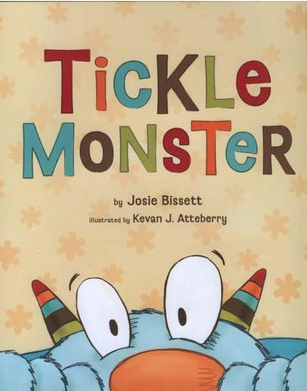
To be honest, when I am offered a book, the art director or editor has chosen me because of a style they have already seen of mine. In discussion with them, they will reference a sample illustration and let me know that that is why they’ve asked me to illustrate the book. I’ve had editors and art directors make suggestions on both line AND palette. In TICKLE MONSTER, we changed the palette a couple of times because the publisher had a particular vision. I did so reluctantly, but in the end I was certain that they had made the right choice. I LOVE the palette in TICKLE MONSTER and BOOGIE MONSTER—as do others—and give all the credit to the publisher for that decision.

#3. Is there a picture book text that you would love to re-illustrate? What about the text excites you?

Kevan

If you are talking about a picture book text by anyone, hmmm…let me think. The first book that comes to mind in Mercer Mayer’s, ONE MONSTER AFTER ANOTHER. A charming story with lovely, fun illustrations and characters. There is no way I could improve on what Mayer did, but I could have the best time creating my own spin on it. GEORGE by Robert Bright would be fun, too. A sweet story with an endearing protagonist. Jose Arugeo’s LOOK WHAT I CAN DO is a wonderful illustration-dependent picture book that would be hilarious to interpret.  The text is nearly non-existent so I don’t know if this is a good example of what about the text excites me. It really is just the inanity of the two characters and their one-upmanship. And then I’d really love to illustrate a collection. Where the illustrations weren’t linear but rather vignettes. Each illustration standing on it’s own, not linked to the previous or the next illustration—like a collection of nursery rhymes, i.e. Mother Goose.

#4. As an illustrator, what is it that you most want writers to understand about your creative process?

Kevan

Probably that ‘I know what I’m doing.’ And to trust me. I will not ruin their story. I will bring it to life and I will treat it with great respect. But the illustration part is mine. It is my half of our collaboration. I am open to any illustration note that is imperative to the story otherwise it is all up to me. And the editor. I don’t want that to sound standoff-ish, I just want to feel comfortable—have them feel comfortable with me—interpreting their story visually.

 THANK YOU, Kevan, for sharing your thoughts. You can find out more about Kevan’s books and illustrations at:  www.oddisgood.com

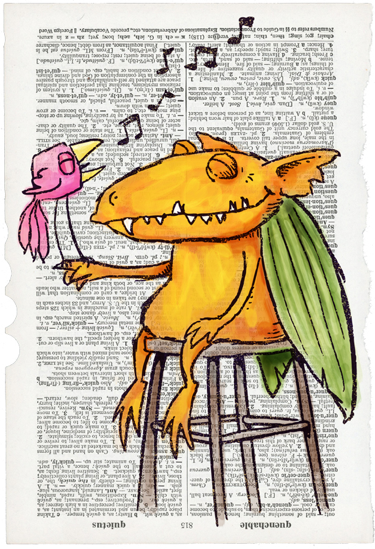
Illus. by Kevan Atteberry

Picture Books Referenced Above

FRANKIE STEIN by Lola M. Schaefer. Illus. by Kevan Atteberry. Marshall Cavendish, 2009.

LOTS OF LETTERS by Tish Rabe. Illus. by Kevan Atteberry. Innovative Kids, 2006.

TICKLE MONSTER by Josie Bissett.  Illus. by Kevan Atteberry. Compendium, 2008.

Groundhog Day

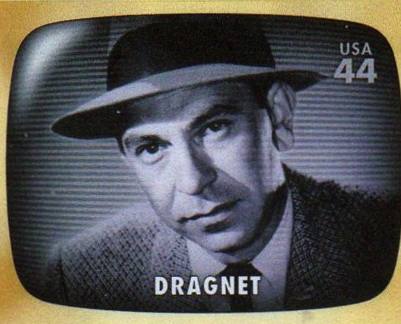
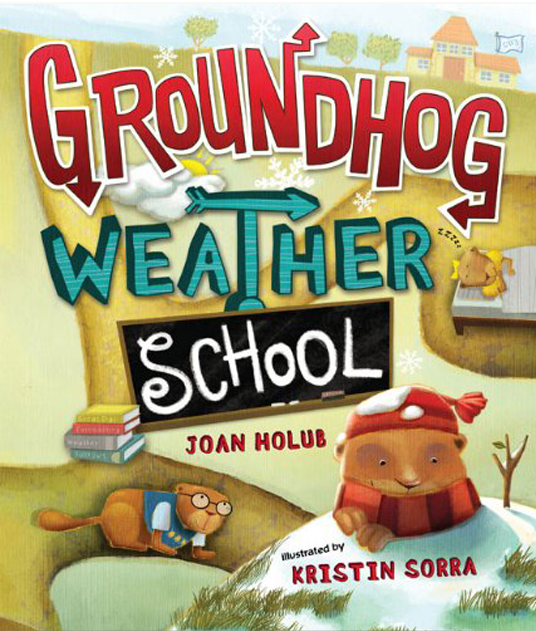
DRAGNET’s detective Jack Webb was famous for supposedly asking for “Just the facts, ma’am.” While that may be advisable for police work, “nothing but the facts” rarely keeps readers engaged. One of the most satisfying developments in recent years has been authors’ ability to blend facts or nonfiction with humor. One of the best is perfect for sharing this time of year–GROUNDHOG WEATHER SCHOOL by Joan Holub. Attempting to impart information about weather, weather forecasting, and groundhogs might have easily induced hibernation amongst readers. But instead, Holub and illustrator Kristin Sorra created a lively, tongue-in-cheek graphic story that’s packed with facts and lots of play.

Find a copy soon. Share it with children, and see what new twists it inspires in your own writing.

GROUNDHOG WEATHER SCHOOL by Joan Holub. Illus. by Kristin Sorra. Putnam, 2009.

Illustrators: Responding to the Text

Craig Orback

 #1. What elements of a manuscript first capture your attention? Plot? Language? Imagery? Tone? Sound? Theme?

Craig

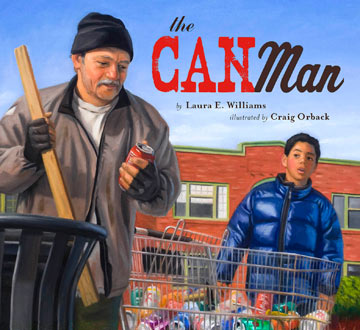
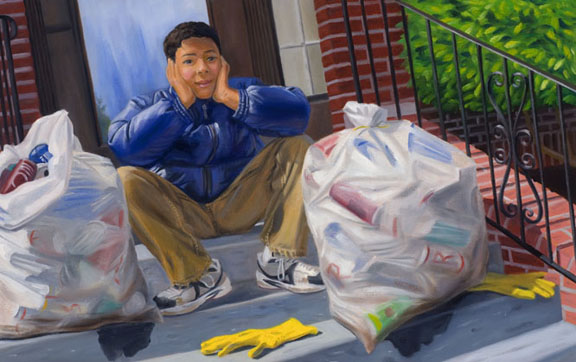
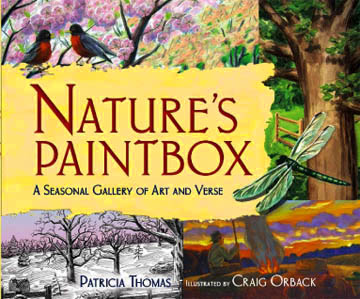
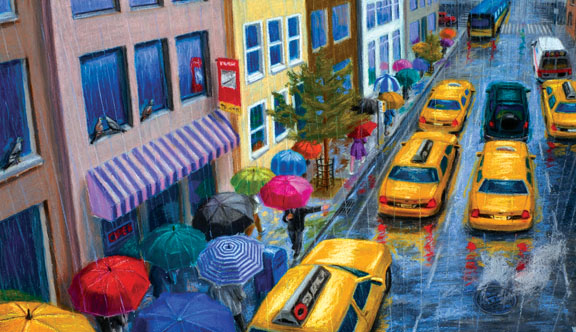
The easy answer would be to say all of the above, which for me is also true. More specifically though I get a lot of enjoyment from the setting, whether it’s historical or not and also the characters. For my picture books THE CAN MAN and NATURE’S PAINTBOX: A SEASONAL GALLERY OF ART AND VERSE both were set in the present which made for a nice change of pace from my typical historical projects. NATURE’S PAINTBOX does not really have a main character; the four seasons were my main characters. Bringing out the fun distinct elements of each season and letting my imagination run wild was really rewarding. It was also my first time illustrating poetry so that brought its own unique challenges. For the book I worked in pen and ink, pastel, watercolor and oil paint to depict each season. Typically an illustrator works in only one consistent medium for each book. For THE CAN MAN it was very character based and deals with serious and topical subject matter like homelessness and wants versus needs as seen through the eyes of a young boy. Tim lives in the city and comes from a family of limited means. He wants a skateboard for his birthday and decides to earn the money himself. I wanted my visuals to be grounded in reality. Living in Seattle at the time I took visual elements from the city but not in any obvious way then put them in the artwork. Traveling around the city with my camera was great fun.

THE CAN MAN

#2. What elements of a manuscript inspire your choice of style, line, and palette?

For example, your illustrations in PAUL BUNYAN, NATURE’S PAINTBOX and THE CAN MAN are at once related, yet still different from one another.

NATURE'S PAINTBOX

NATURE'S PAINTBOX

NATURE'S PAINTBOX

 Craig

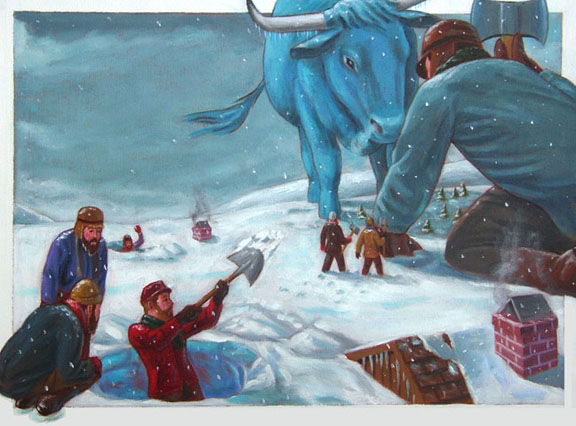
For THE CAN MAN I knew I wanted to work in my usual medium oil to capture the richness and detail of Tim’s life in the city.  Oil painters like Edward Hopper and Wayne Thiebauld among many others were and continue to be an inspiration and I felt that oil paint best captured the urban realism depicted in that story. As I mentioned earlier, in NATURE’S PAINTBOX the poet Patricia Thomas in the text makes comparisons between the seasons and the four different mediums so the decision on what medium to use was made for me. I did however have to practice with pen and ink and pastel, two mediums I hadn’t used much since art school and much earlier. I felt a lot of pressure with that book to make all the different mediums look equal as far as skill level. For PAUL BUNYAN I wanted something flatter and more cartoon like so I worked in acrylic paint and used a lot of line work, which gave me the effect I was looking for. I wanted less realism and a more playful quality.

#3. Is there a picture book text that you would love to re-illustrate? What about the text excites you toward doing this?

Craig

They aren’t really picture books but I love a lot of the classic adventure stories that N.C. Wyeth illustrated a hundred years ago like TREASURE ISLAND, KIDNAPPED, ROBINSON CRUSOE and others. His images are so burned in my brain though it would be pretty hard I think to come up with something new or that wasn’t too influenced by his work. KIDNAPPED is a favorite story I have reread many times. I love the setting of the Scottish Highlands in the 1700’s and the main characters Alan Breck Stewart and David Balfour. The tale is so vivid in every way.

#4. As an illustrator, what is it that you most want writers to understand about your creative process?

Craig

That we take these stories to heart very deeply and try really hard to bring them to life visually. Reading them over and over multiple times, acting out scenes in order to help you sketch the characters better and capture their feelings brings the illustrator into this world the author has created. Along with the satisfaction of completing a project I do feel a little bit of sadness and even a mild depression when it comes time to say goodbye to the world the writer created and I immersed myself in. If you’re lucky though another story awaits just around the corner!

THANK YOU, Craig, for sharing your thoughts and reflections. You can find out more about Craig’s work and books at:  http://www.craigorback.com

PAUL BUNYAN

 Picture Books Referenced Above

 THE CAN MAN by Laura E. Williams. Lee & Low, 2010.

NATURE’S PAINTBOX: A SEASONAL GALLERY OF ART AND VERSE by Patricia Thomas. Millbrook Press, 2007.

PAUL BUNYAN adapted by Stephen Krensky. Millbrook Press, 2007.

One Picture Book Text: Multiple Interpretations

Charlotte Zolotow

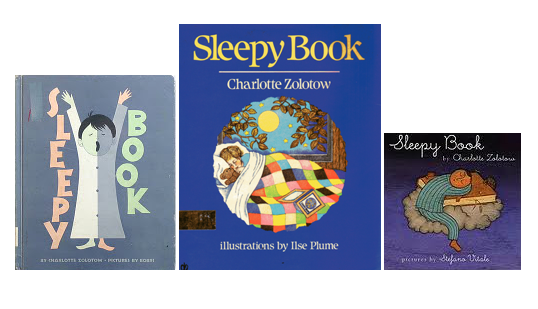
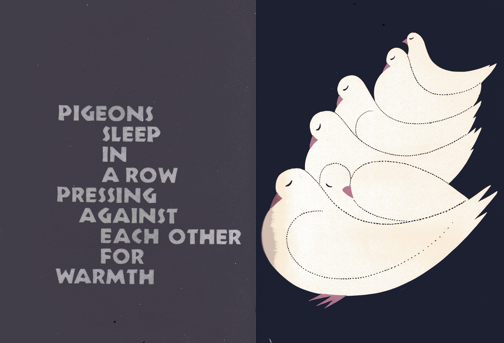
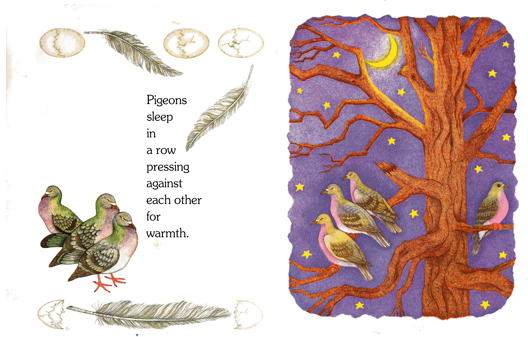
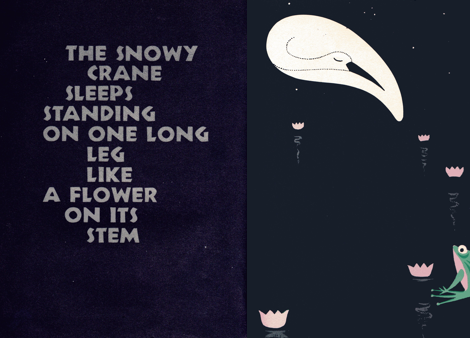
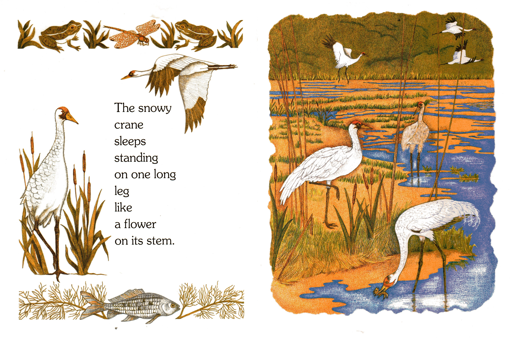
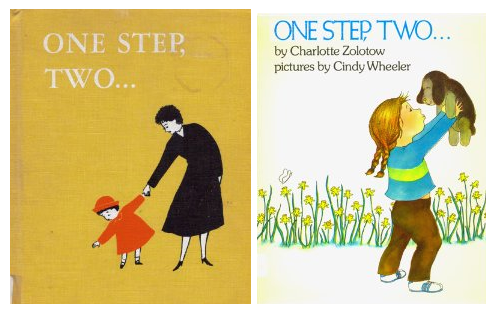
Charlotte Zolotow both edited and wrote many of the outstanding children’s books of the last 60 years. Thanks to the expanse of her writing career, several of her earlier picture books have been re-illustrated in recent years. The differences in styles, trends and printing technology demonstrate once again how many ways there are to interpret a single picture book text.

pigeons illus. by Bobri

pigeons illus. by Plume

cranes illus. by Bobri

cranes illus. by Plume


As picture book writers, we write to communicate with our young readers, but we also write to communicate with our future illustrators.

Picture Books to Explore

IF YOU LISTEN by Charlotte Zolotow. Illus. by Marc Simont. Harper, 1980.

IF YOU LISTEN by Charlotte Zolotow. Illus. by Stefano Vitale. Running Press, 2002.

ONE STEP, TWO by Charlotte Zolotow. Illus. by Cindy Wheeler. Lothrop, Lee & Shepard, 1981.

ONE STEP, TWO by Charlotte Zolotow. Illus. by Roger Duvoisin. Lothrop, Lee & Shepard, 1955.

THE SLEEPY BOOK by Charlotte Zolotow. Illus. by Vladimir Bobri. Lothrop, Lee & Shepard, 1958.

THE SLEEPY BOOK by Charlotte Zolotow. Illus. by Ilse Plume. Harper, 1988.

THE SLEEPY BOOK by Charlotte Zolotow. Illus. by Stefano Vitale. Harper, 2001.

Illustrators: Responding to the Text

 Julie Paschkis

 #1. What elements of a manuscript first capture your attention? Plot? Language? Imagery? Tone? Sound? Theme?

Language is the first thing that grabs me. But it is hard to pick out any one element; all of the elements work together to create a good story. I respond to a good story first as a reader. When I read something that I want to illustrate I feel a general excitement. I rarely envision specific imagery right away.

I read a text so many times and from so many angles as I am illustrating; I really grow to appreciate a well-written text more and more as I am working on a book.

In your wonderful book WHO PUT THE COOKIES IN THE COOKIE JAR? I responded to the rhythmic qualities of the language and also to the loving message. It felt right to illustrate it in a way that was influenced by the books of my childhood.

2. What elements of a manuscript inspire your choice of style, line, and palette?

For example, your illustrations in THROUGH GEORGIA’S EYES, HERE COMES GRANDMA, and MRS. CHICKEN AND THE HUNGRY CROCODILE are at once related, yet still different from one another.

Before I start drawing at all I let the manuscript percolate in the back of my mind for as long as I can. Gradually I get a sense of what I want the illustrations to look like. It is a combination of intuition and rational decision-making. I will also do research related to the text.

 When I illustrated THROUGH GEORGIA’S EYES I read her biography, looked at lots of her paintings, visited her home in Abiquiu and her museum in Santa Fe before starting any sketches. That was the rational part. But I was still stumped for how to approach it. In Santa Fe I went to the folk art museum and saw some Polish paper cuts and made the intuitive leap to illustrate that book as paper cuts. That way I could honor her paintings without trying to paint a Georgia O’Keeffe; translating the medium allowed me to use her imagery in a way that was still mine.

In HEAD BODY LEGS by Meg Lippert and Won-ldy Paye I wanted bright colors and simple shapes intuitively to echo the simple and funny story. Specifically I was inspired by Asafo Flags of West Africa as a way to approach the storytelling. I continued that style in MRS. CHICKEN and in THE TALKING VEGETABLES.

Asafo flag

HEAD BODY LEGS

In every book I want the pictures to amplify and echo the words. And I want to have fun painting it. I think I have succeeded if the reader can’t imagine the words and the pictures without each other. The words come first in my process.

3.  Is there a picture book text that you would love to re-illustrate? What about the text excites you toward doing this?

I would love to illustrate Peter and the Wolf. I did a poster for NW Sinfonietta a few years ago. I listened to the story and the music while I was working on it. I love them both so much. I would like to illustrate the whole piece.

4.  As an illustrator, what is it that you most want writers to understand about you creative process?

I want the author to write a great manuscript and trust me to bring my best to it. These are the things that make it fun for me to illustrate a manuscript:

*There are wonderful words.

*Something happens – it is easier to illustrate a story than a reverie.

*Not everything is spelled out; there are places for me to use my imagination.

*I think that the same qualities that make a book good to read make it good to illustrate.

THANK YOU, JULIE, for sharing your thoughts. To learn more about Julie, her illustrations, books, paintings, and fabric designs please visit her website:  <www.juliepaschkis.com>

Picture Books Referenced Above

HEAD, BODY, LEGS by Won-Idy Paye & Margaret Lippert, Holt, 2002.

THROUGH GEORGIA’S EYES by Rachel Victoria Rodriguez. Holt, 2006.

WHO PUT THE COOKIES IN THE COOKIE JAR by George Shannon. Holt, TBA.

One Picture Book Text: Two Interpretations

 When Richard Jesse Watson mentioned FERDINAND THE BULL as the picture book text he’d most like to illustrate I hurried to my bookshelves. I have loved FERDINAND since childhood, and some 40 years ago found a German edition illustrated by Werner Klemke.

While we’ve grown used to folktales being illustrated or interpreted by a wide range of artists, it is unusual for a modern text to be re-illustrated. Our initial reaction often resembles our response to the remake of a beloved film. “What have they done?” But exploring such examples can be valuable to those of us who write but not illustrate. It helps us understand how two different artists can experience and envision our words and story.

Though this German edition is out of print, we can see all the illustrations thanks to the Internet. Go to YouTube: Ferdinand der Stier.wmv – YouTube.

 <www.youtube.cm/watch?v=G8vddifa1RM>

Enjoy!

Picture Books Discussed

Leaf, Munro. FERDINAND THE BULL. Illus. by Robert Lawson. Viking, 1938.

Leaf, Munro FERDINAND DER STIER. Illus. by Werner Klemke.  Transl. by Fritz Guttinger. Parabel Verlag, Date Unknown.

Illustrators: Responding to the Text

After 100 posts about picture books, I’m yearning to add other voices. I’ve begun to invite illustrators to answer a few questions about how they respond, relate to, and expand a text they didn’t write themselves. In other words, how do illustrators respond to our manuscripts.

Our first illustrator is Richard Jesse Watson.

#1. What elements of a manuscript first capture your attention? Plot? Language? Imagery? Tone? Sound? Theme?

What a clever question, George.  The first thing that captures my attention is the envelope (that is, if it arrives by mail). Things are changing so fast, that the traditional form of mail may be obsolete by the time you get this response. But I’m sure you remember what mail is even though your readers may not.  So, to clarify for you readers of George, I was referring to Medieval Mail, or Snail-Mail, or Analogue Word Transfer, or in other words,  The Hob-Nobbing of Wizards, using paper and ink made from walnuts. .  What was the question? Oh, right, am I intrigued by envelopes?  In a word, yes.  The fact that someone sent me an envelope with yummy words or story, is so exciting.  And the possibility of illustrating those words sends me into a little orbit. An orbit of imaginings.  Ahhh, what might I do with these words?

The tone of the words is what hits me at first.  Does the writer grab me by the…uh,  medulla. Am I intrigued? Is this writing fresh? Not like, Slap!!>>fresh, but original voice fresh. Then the other things follow: Imagery. Sound. Plot. Theme. Etc.

#2. What elements of a manuscript inspire your choice of style, line, and palette?

For example, your illustrations in THE LORD’S PRAYER, THE HIGH RISE GLORIOUS SKITTLE SKAT ROARIOUS SKY PIE ANGEL FOOD CAKE and THE MAGIC RABBIT are at once related, yet still different from one another.

 The final emotional delivery of the manuscript will inspire me to want to illustrate the story or not. As an illustrator, forsooth, even as a reader, I want to be led down a garden path; hopefully one with pretty flowers, and ripe fruit. Some lizards would be cool. Maybe I could be wearing a Davy Crockett hat.  It sure works if you surprise me with your thoughtfully arranged words, maybe startle me!  Amuse me? It does me-the-reader wonders if you can emotionally nudge me, or even wrench me  in some lingering way.  We could also just have fun.  “Good clean fun,” to quote Bill Murray.

But all that to say, a good story will compel me to experiment with medium in some unique way. My goal is to be true to the text but to explore the text and as N. C. Wyeth said, “To paint between the lines.”

THE NIGHT BEFORE CHRISTMAS by Clement C. Moore

 #3. Is there a picture book text that you would love to re-illustrate? What about the text excites you toward doing this?

I would love a chance to re-illustrate THE STORY OF FERDINAND by Munro Leaf. Actually it is so perfect the way it is. Forget I said anything. Ixnay on the what I saidnay.  But I love the anti-war sentiment, and the idea of letting each person be true to their unique gifting. Hard question to answer because I love so much in literature.  I am currently illustrating The Twenty Third Psalm. I would love to illustrate some Washington Irving, some Edgar Allan Poe.  THE WIND IN THE WILLOWS is a book I have always wanted to illustrate.

#4. As an illustrator, what is it that you most want writers to understand about your creative process?

 That illustrators cry real tears. We bleed. We put our pants on one leg at a time.  We eat turkey one leg at a time.  An illustrator’s job is to create a sub-text to the writer’s text.  A children’s picture book illustrator will be telling HALF of the story. One half, your words, one half, our pictures. It is an intimate collaboration. A perfect marriage of text and art. Or like the bishop says in THE PRINCESS BRIDE, “Mayowage…”

THANK YOU, RICHARD for sharing your thoughts.  For a fascinating look at Richard’s work and life please visit his website: <richardjessewatson.com>

THE MAGIC RABBIT by Richard Jesse Watson

 Picture Books Referenced Above

Moore, Clement C. THE NIGHT BEFORE CHRISTMAS. HarperCollins, 2006.

Watson, Benjamin James. THE BOY WHO WENT APE. Illus. by Richard Jesse Watson. Blue Sky Press, 2008.

Watson, Richard Jesse. THE MAGIC RABBIT. Blue Sky Press, 2005.

Willard, Nancy. THE HIGH RISE GLORIOUS SKITTLE SKAT ROARIOUS SKY PIE ANGEL FOOD CAKE.  Harcourt, 1990.

Picture Books and the Short, Short Story

II of II

Illustration by Ethan Long. BIRD AND BIRDIE

The best and best-known picture book short, short stories feature friends and siblings. It only makes sense because an established relationship lets one “cut to the chase” and story. George and Martha are two of the best-known pals and hippos in literature. James Marshall captures and explores their relationship through seven collections of short stories.

Whether one labels them as vignettes or sketch stories, Marshall’s moments revealing the lives of George and Martha engage and entertain. They also linger in the reader’s memory. Who hasn’t been caught putting the equivalent of split pea soup in a shoe in the hopes of not offending the cook?

No matter how long or fat the great American novel may be, it still comes down to a series of brief and personal moments. Such moments are the heart of GEORGE AND MARTHA and Laura Kvasnosky’s ZELDA AND IVY. Where George and Martha are chosen friends, Zelda and Ivy are siblings who are expected to act like chosen friends. This common and complex relationship gives author Kvasnosky a rich and varied playground.

While each short story in ZELDA AND IVY feels complete in itself, the full collection brings both a deeper connection with the characters and a deeper connection with reality. Zelda may eventually have a moment of compassion, but she will always be the older sister who makes sure she gets to do everything first.

Ethan Long’s BIRD & BIRDIE is different in that it focuses on the creation of a relationship. And, like all new relationships, BIRD & BIRDIE is series of miscommunication, upsets, and opportunities for empathy.

Some people write long stories. Others write long stories by creating a mosaic of moments. That option is our opportunity. On those days you can’t think of a story or plot, relax and return to the moments of you life.  As James Marshall, Laura Kvasnosky and Ethan Lang prove, those moments might well be a collection of stories just waiting to be shared.

 Picture Books Discussed

 BIRD AND BIRDIE IN “A FINE DAY” by Ethan Long. Tricycle Press, 2010.

GEORGE AND MARTHA by James Marshall. Houghton Mifflin, 1972.

ZELDA AND IVY by Laura McGee Kvasnosky. Candlewick, 1998.

Picture Books and the Short, Short Story

I of II

In the early 1970s Arnold Lobel and James Marshall (who became good friends) each started what became a series of short story collections about two good friends. FROG AND TOAD ARE FRIENDS* and GEORGE AND MARTHA brought a new possibility to the picture book. Rather than a single narrative arc based in plot, one could also focus on characters and relationship in a series of encounters. Another way to look at short stories, be they by Chekhov, Cheever, Marshall or Kvasnosky, is that they are snapshots of human behavior. In the end, every novel and every life is an album of such snapshots.

Within the term short story there are a variety of subgenres and fluid definitions of each. There is no rule that one must not blend these categories, but it is valuable to know their differences and possibilities.

 Flash Fiction

 Primary characteristics are extreme brevity, fast pacing from one plot point to the next, and less developed characters. Many sight Aesop as the first flash fiction writer.

Eve Feldman’s BILLY & MILLY, SHORT & SILLY brings extreme flash fiction to picture books. These 13 stories are each told in only three or four words. For example:

 Stoops. Hoops. Scoops. Oops.

 Stoops” establishes setting (front steps). “Hoops” establishes activity (shooting hoops). “Scoops” establishes second character’s activity (eating an ice cream cone). And “Oops” proclaims conflict (rogue basketball ruins the ice cream cone). Tuesday Morning’s illustrations are vital to the reader’s grasp of these very mini stories because they clarify setting, characters and action.

Another of Feldman’s stories manages to establish setting, character, conflict and resolution in only four words.

Bunk. Trunk. Skunk. Clunk.

 Whether you’re writing picture book short stories or a single story picture book try a draft using only 5 to 10 words. You’ve got nothing to lose, and it might help you find the primary beats of your story.

Illus. by Tuesday Mourning BILLY & MILLY

Next spring brings another example of cracker-jack flash fiction in picture book form. Jeff Mack’s forthcoming FROG AND FLY: SIX SLURPY STORIES is a playful delight.  I read the F & Gs at my local bookstore, and can’t wait to by my copy come March.

Coming next: The “sketch story”, the “vignette”, plus George & Martha, Zelda & Ivy, and Bird & Birdie.

*Because FROG AND TOAD ARE FRIENDS is an early reader I will not be discussing it these two posts. For a look at Frog and Toad and as they compare and contrast with George and Martha please visit my biography on Lobel entitled ARNOLD LOBEL (Twayne, 1989).

Picture Books Discussed

BILLY AND MILLY: SHORT AND SILLY by Eve B. Feldman. Illus. by Tuesday Mourning. Putnam, 2009

BIRDY AND BIRDIE IN “A FINE DAY” by Ethan Long. Tricycle Press, 2010.

FROG AND FLY: SIX SLURPY STORIES by Jeff Mack. March 2012

GEORGE AND MARTHA by James Marshall. Houghton Mifflin, 1972.

ZELDA AND IVY by Laura McGee Kvasnosky. Candlewick, 1998.

Are You a Good Date?

Edward Lear

One of my favorite quotes about writing refers to two elements we rarely associate with picture books, but I believe they are vital to our writing. #1 Kurt Vonnegut. #2 Dating.  The quote comes via John Casey who reports,

“Kurt Vonnegut used to say to his class at Iowa, ‘You’ve got to be a good date for the reader.”

What’s a good date? An equal. Someone engaged in the moment and conversational. Someone who fosters a give and take. Sparks interest. Someone who is open and able to reveal what they have in common. Honest. Gently flirtatious.

Are you a good date for your reader? Are you making sure to work toward keeping his interest and attention?  Are you being honest, or pretending to be something you’re not?

Like fish in the sea, there are plenty of books. If we want to make sure our reader wants to see us again we’re wise to capture both their head and heart.

Follow

Get every new post delivered to your Inbox.

Join 36 other followers